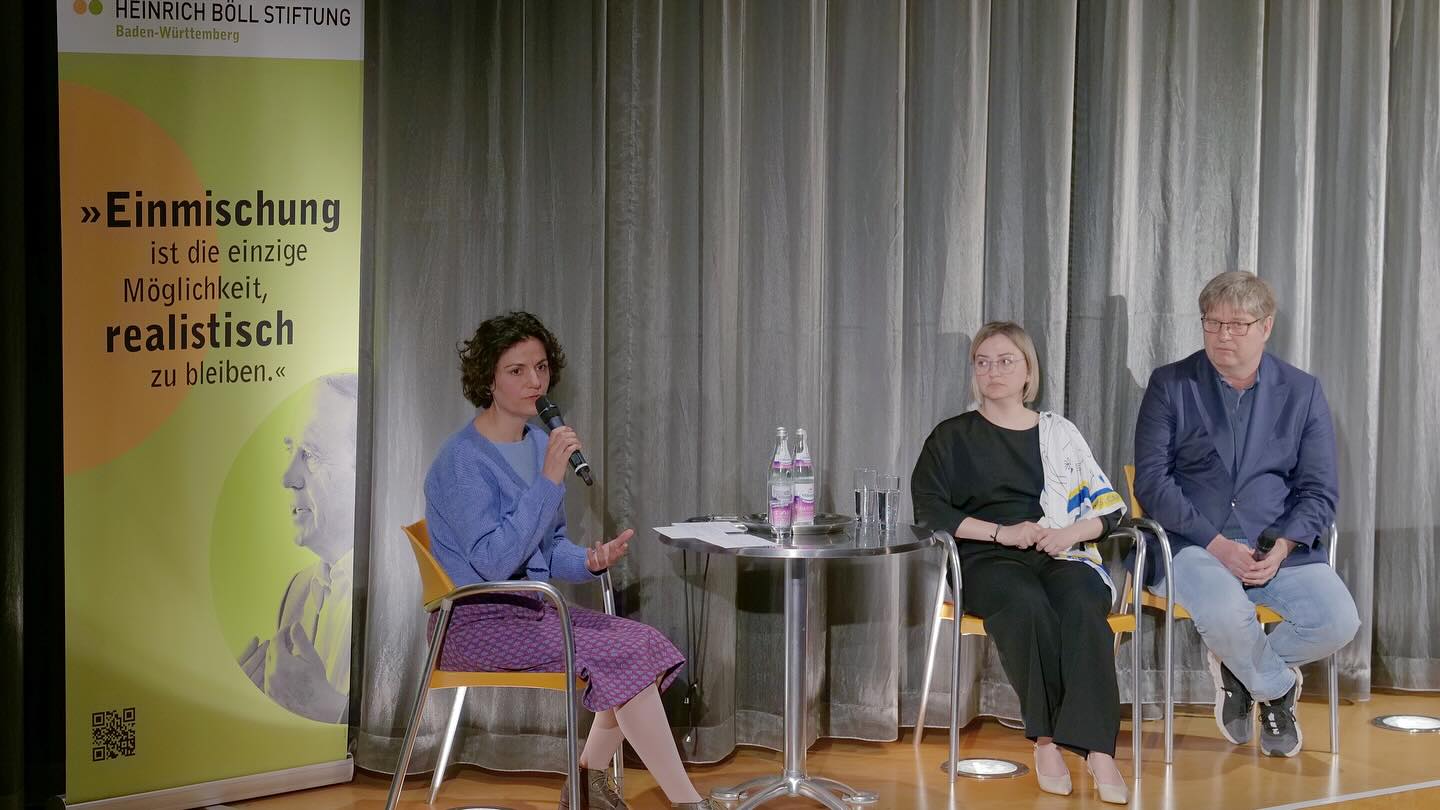
Together with the Heinrich Böll Foundation Baden-Württemberg we create spaces in which we can talk about difficult topics with audiences from the greater Stuttgart area. The formats are varied: panel discussions, film screenings, readings with guests from all over Germany and Ukraine.
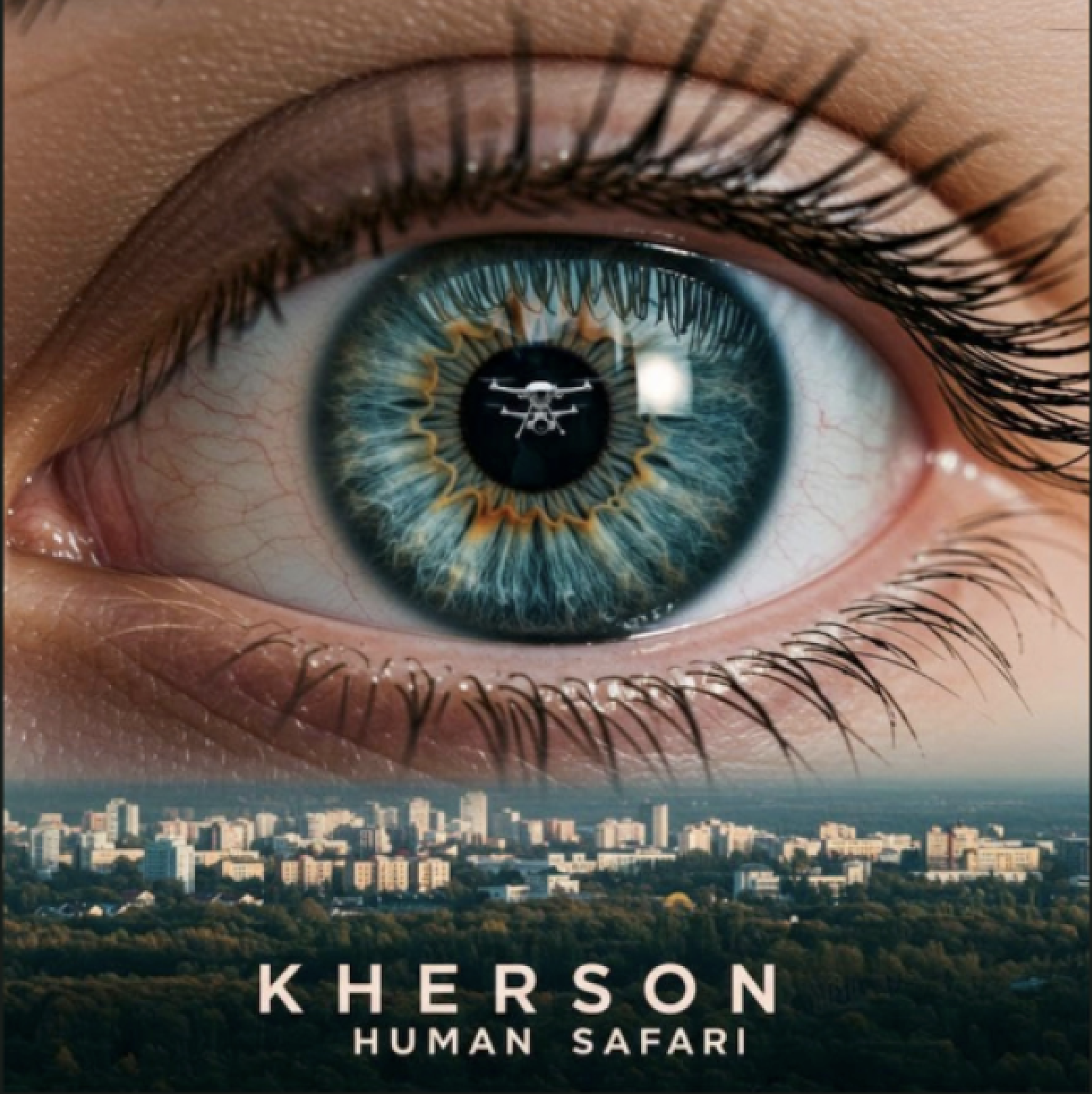
On 18.02.2026 we cordially invite you to watch the film Kherson: Human Safari in the Studio at the Bollwerk to watch. The film is part of a series of events organised by the Ukrainian Studio for Culture and Sport and the Heinrich Böll Foundation Baden-Württemberg to commemorate the anniversary of the start of Russia's full-scale war of aggression against Ukraine four years ago.
Kherson: Human Safari (72 min.) is a documentary film by US war correspondent Zarina Zabrisky, shot on the frontline in Kherson, Ukraine. The film documents the entire history of the city since the beginning of Russia's large-scale invasion in 2022: the occupation, the resistance, the liberation, the flooding and the ongoing destruction caused by daily attacks. The „human safari“ - Russia's use of drones to hunt civilians - is part of this broader narrative of survival, resilience and defiance.
Badge of honourThe Russian Foreign Ministry has placed Zarina Zabrisky on its official sanctions list because of her reporting.
When: 18.02.2026, 18:00 to max 20:00
WhereAtelier am Bollwerk
Language: Original with subtitles in DE
Torture. Arbitrariness. Occupation pressure.
Russia currently occupies around 20 per cent of Ukraine. An estimated 5 to 6 million Ukrainians live in these areas and the pressure of occupation is enormous. People are disappearing into torture cells and prisons. They are often accused of extremism, discrediting the Russian army or the illegal distribution of pro-Ukrainian symbols. In addition, Ukrainian boys and men are forcibly mobilised into the Russian army. All people must accept Russian passports, otherwise they will receive neither pensions nor medical treatment. Protests are nipped in the bud, but a presumably small number of people are putting up resistance in groups such as the »Yellow Ribbon« or »Atesch«. They paint blue and yellow symbols in public spaces, spy on Russian military bases or damage militarily relevant infrastructure.
MIT:
- Andrea Beer, journalist at SWR, worked for almost 10 years as a foreign correspondent for ARD, helped set up the Kyiv studio, reported on the Russian war of aggression in Ukraine, travelled regularly in the country, including in the combat zone, and received many awards for her work
- Mariia Kalus, journalist from Kyiv, works at WDR in Cologne.
When: 19.02.2026, 19:00 to 20:30
Where: Hospitalhof Stuttgart, Büchsenstr. 33, 70174 Stuttgart
Russian war crimes in Ukraine
Dealing with war crimes is a key prerequisite for justice and lasting peace. Only if atrocities are documented, investigated and legally prosecuted can victims be recognised and future crimes prevented. The Russian war of aggression against Ukraine poses enormous challenges for international criminal justice - at the same time, it is a touchstone for the effectiveness of international legal norms and the responsibility of the international community.
Under the working title „Russian war crimes in Ukraine, international criminal jurisdiction and the debate in Germany“ We invite you to an event with keynote speeches and a subsequent panel discussion.
MIT:
- Klaus Hofmann, Senior Public Prosecutor Freiburg, worked on the investigation of war crimes in Ukraine and advised the Ukrainian Prosecutor General's Office
- Nataliya Pryhornytska, political scientist, activist and co-founder of Open Platform e. V. and the Alliance of Ukrainian Organisations
- Dr Marc Zeccola, Research Associate at the Institute of Economics and Law, Department of Law at the University of Stuttgart
MODERATION: Andrea Beer, SWR
When: 20.02.2026, 19:00 to 20:30
Where: Hospitalhof Stuttgart, Büchsenstr. 33, 70174 Stuttgart


Past events
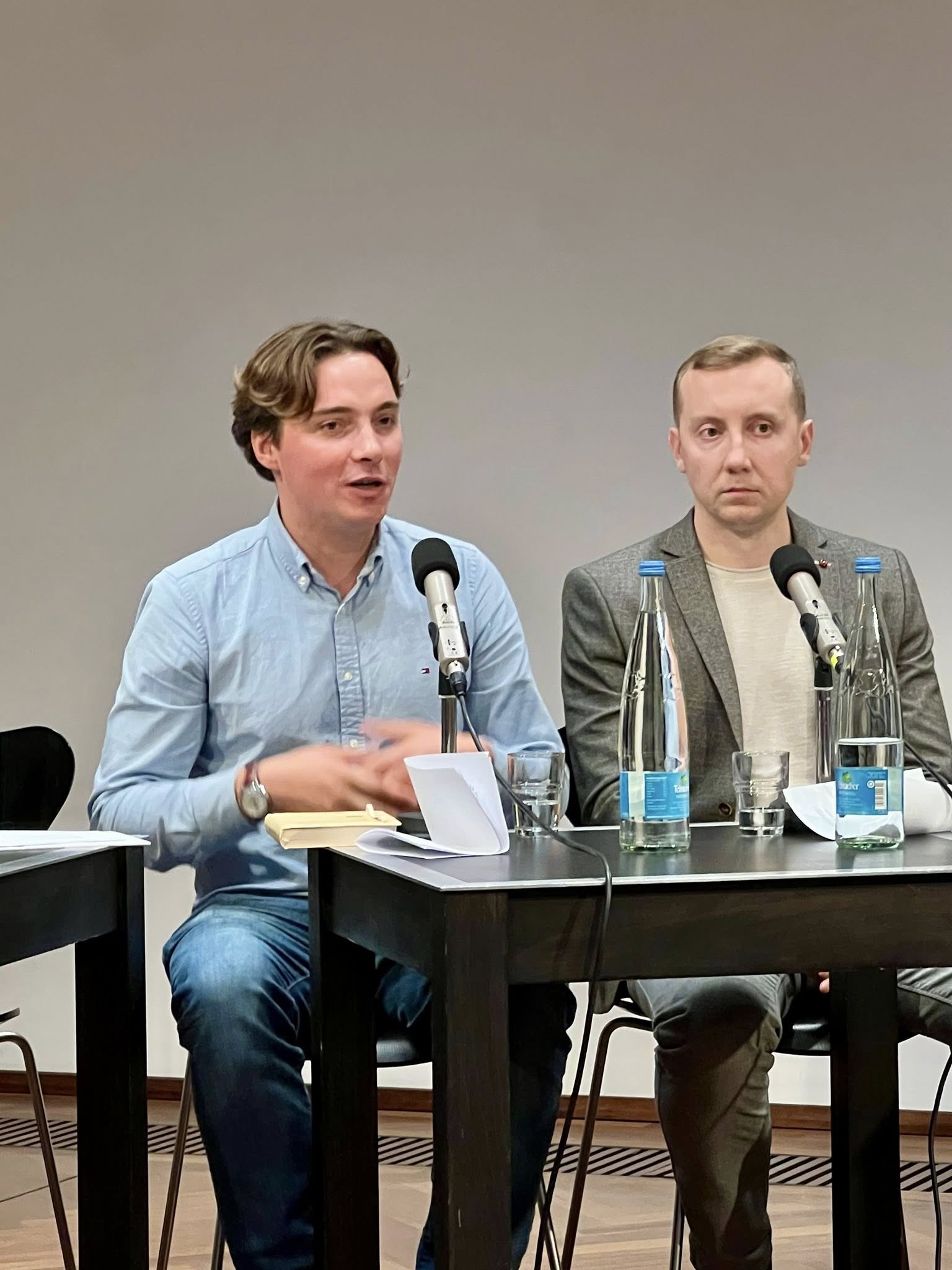
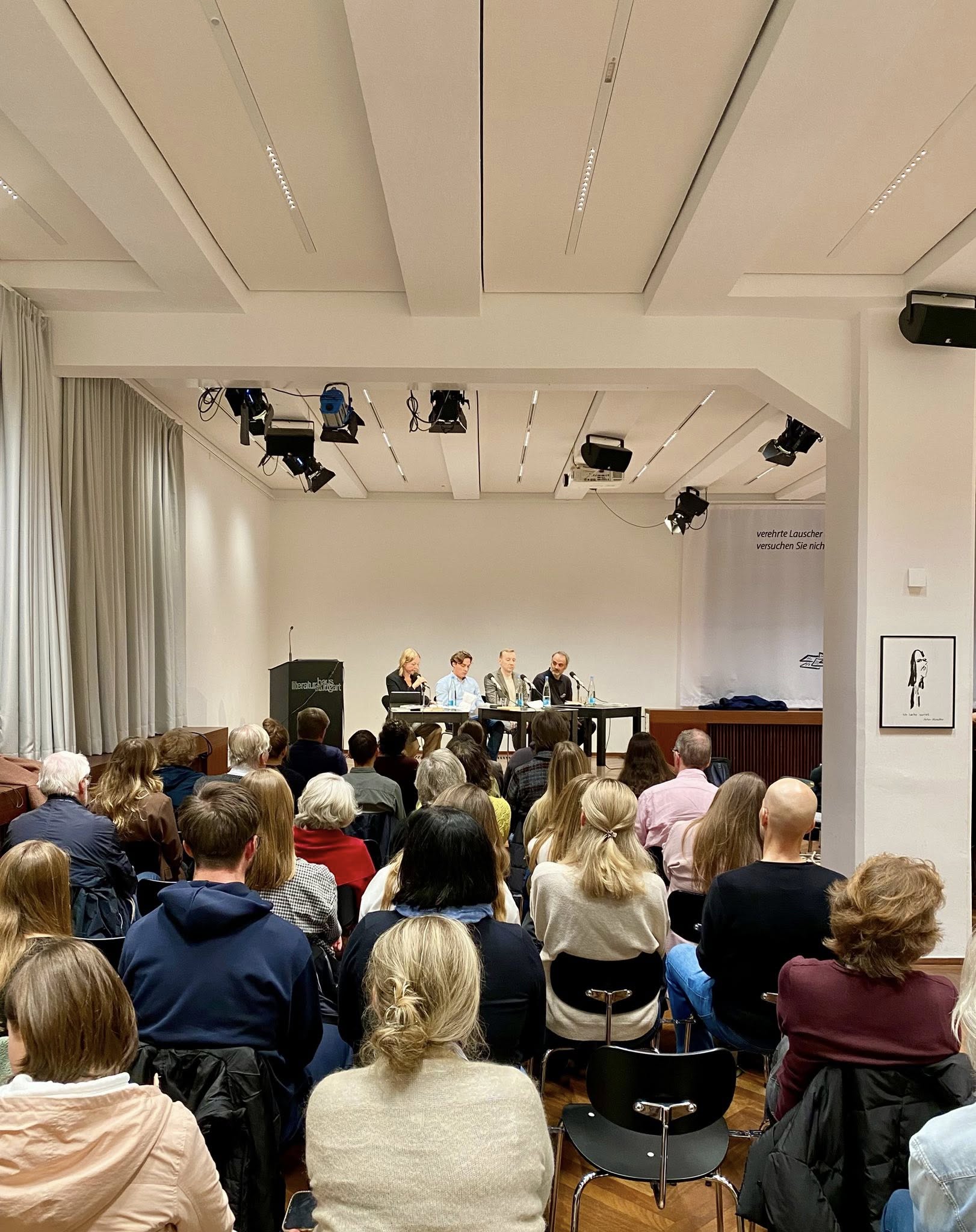
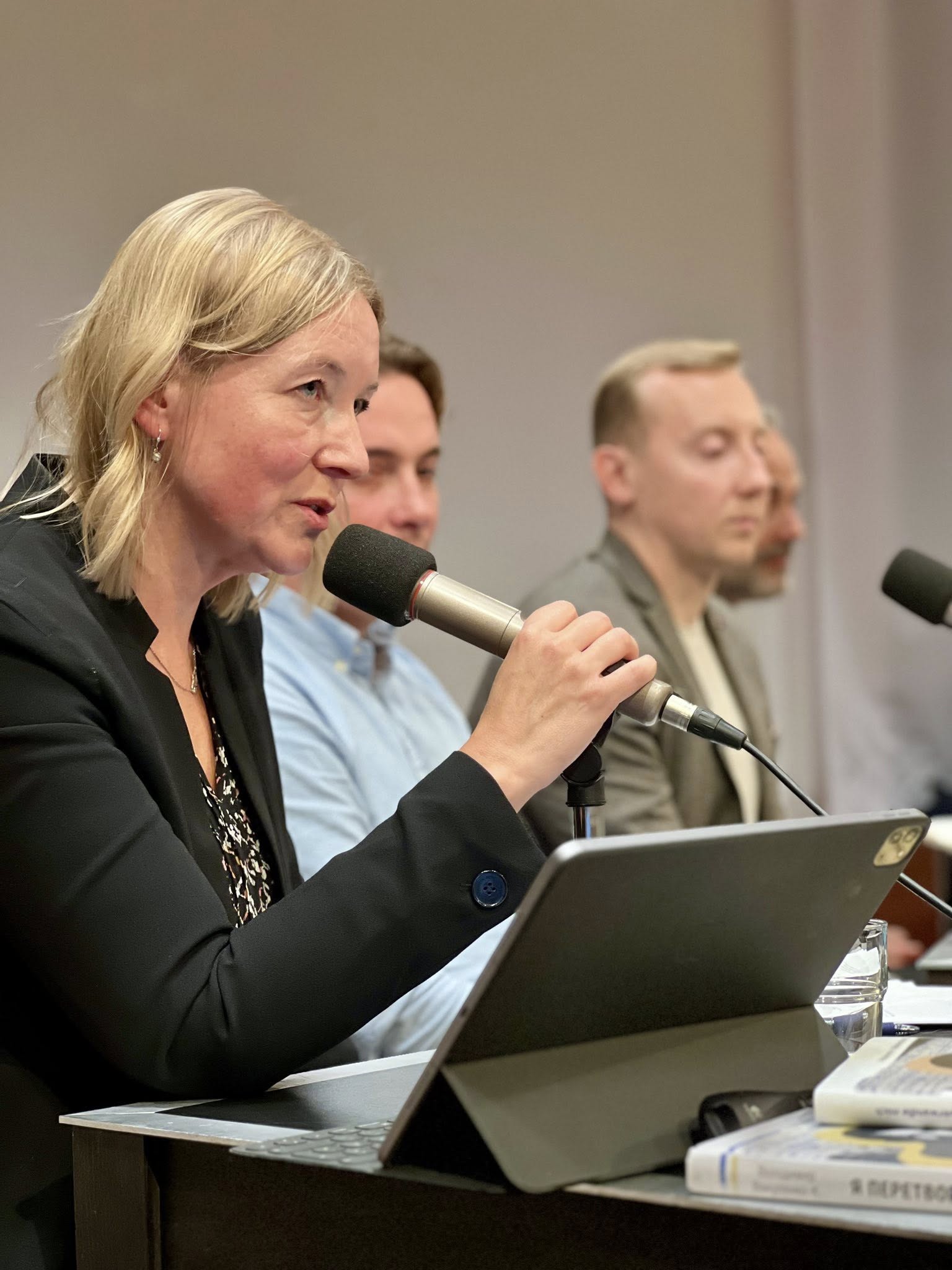
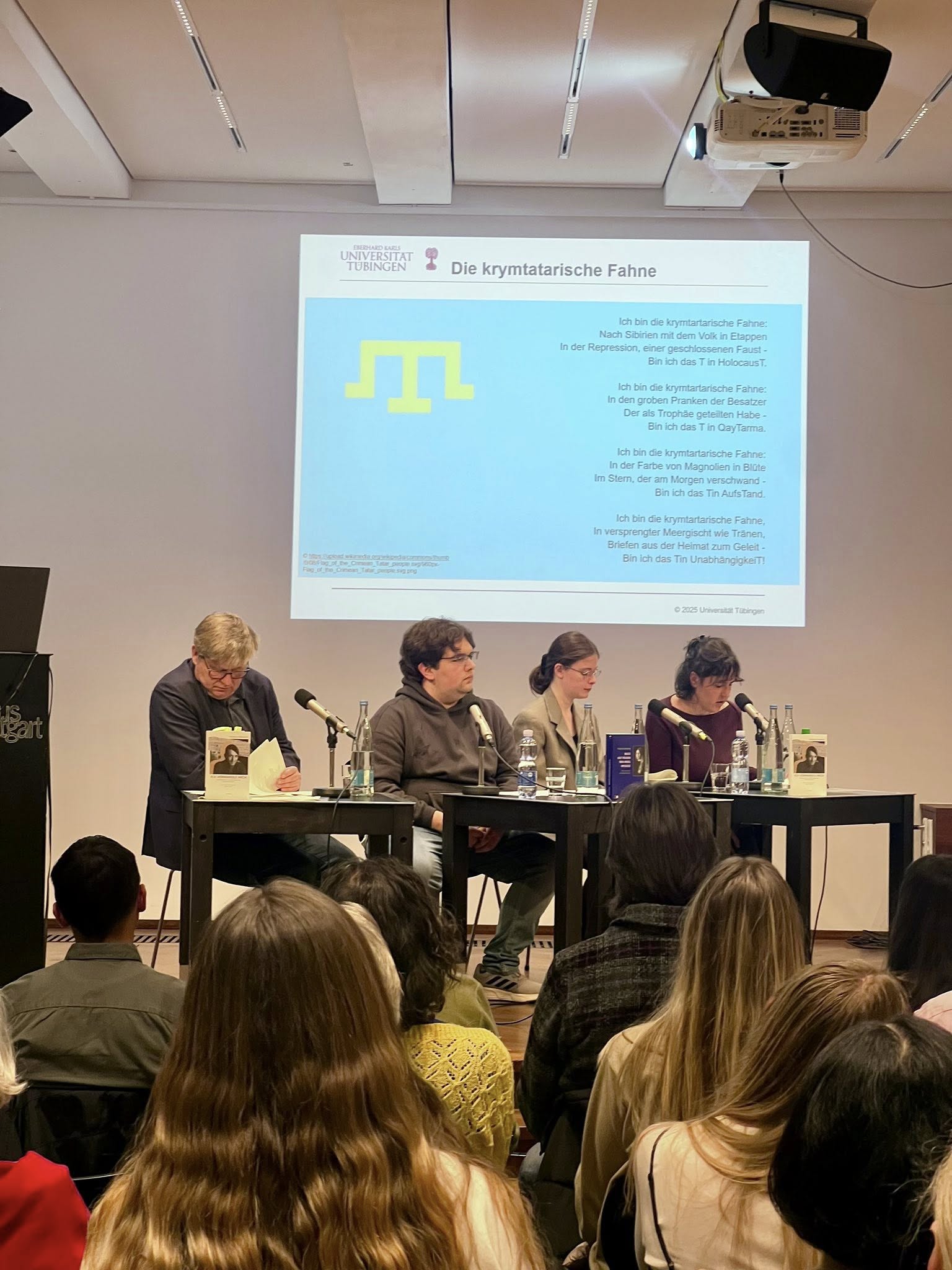
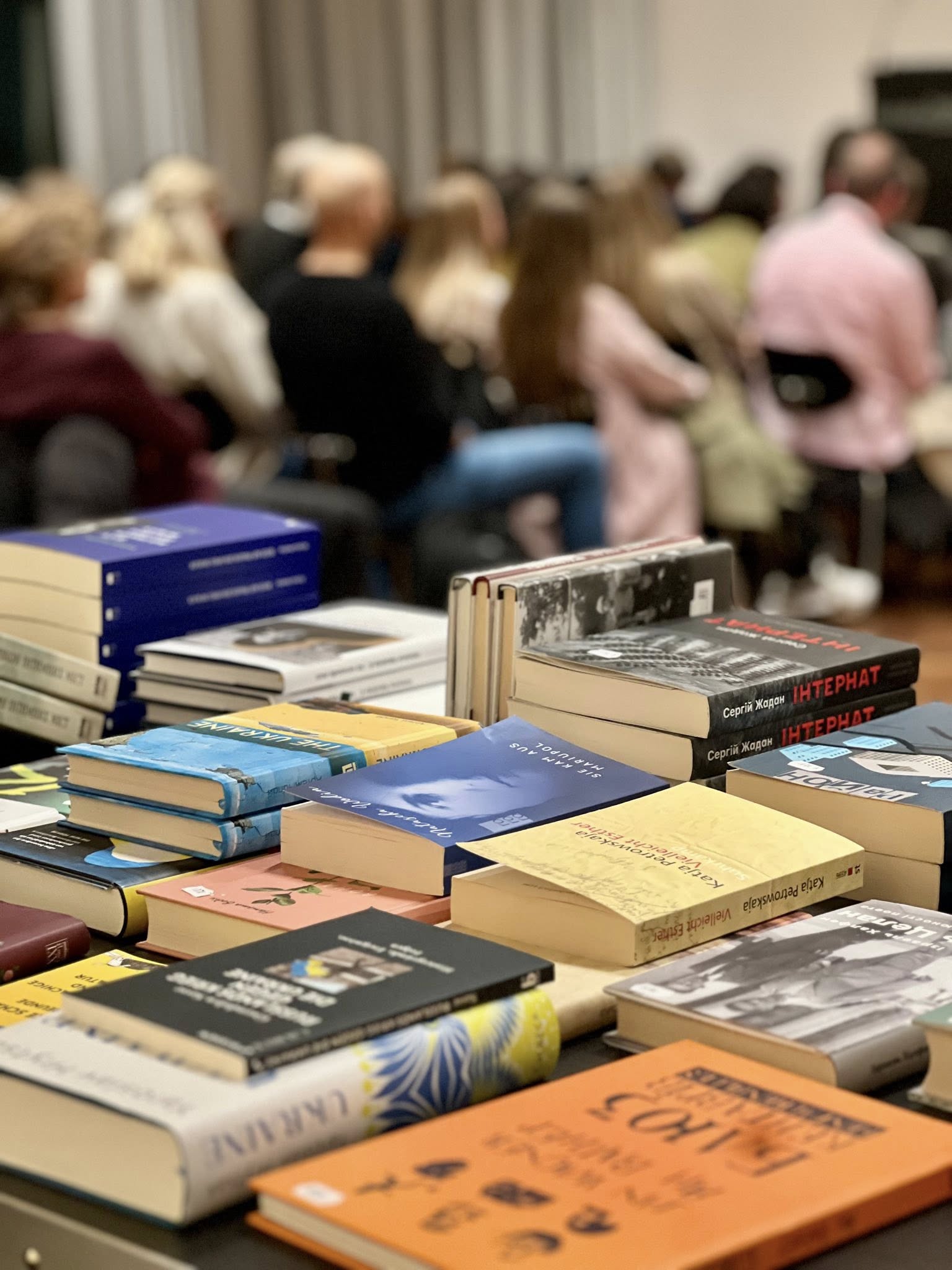
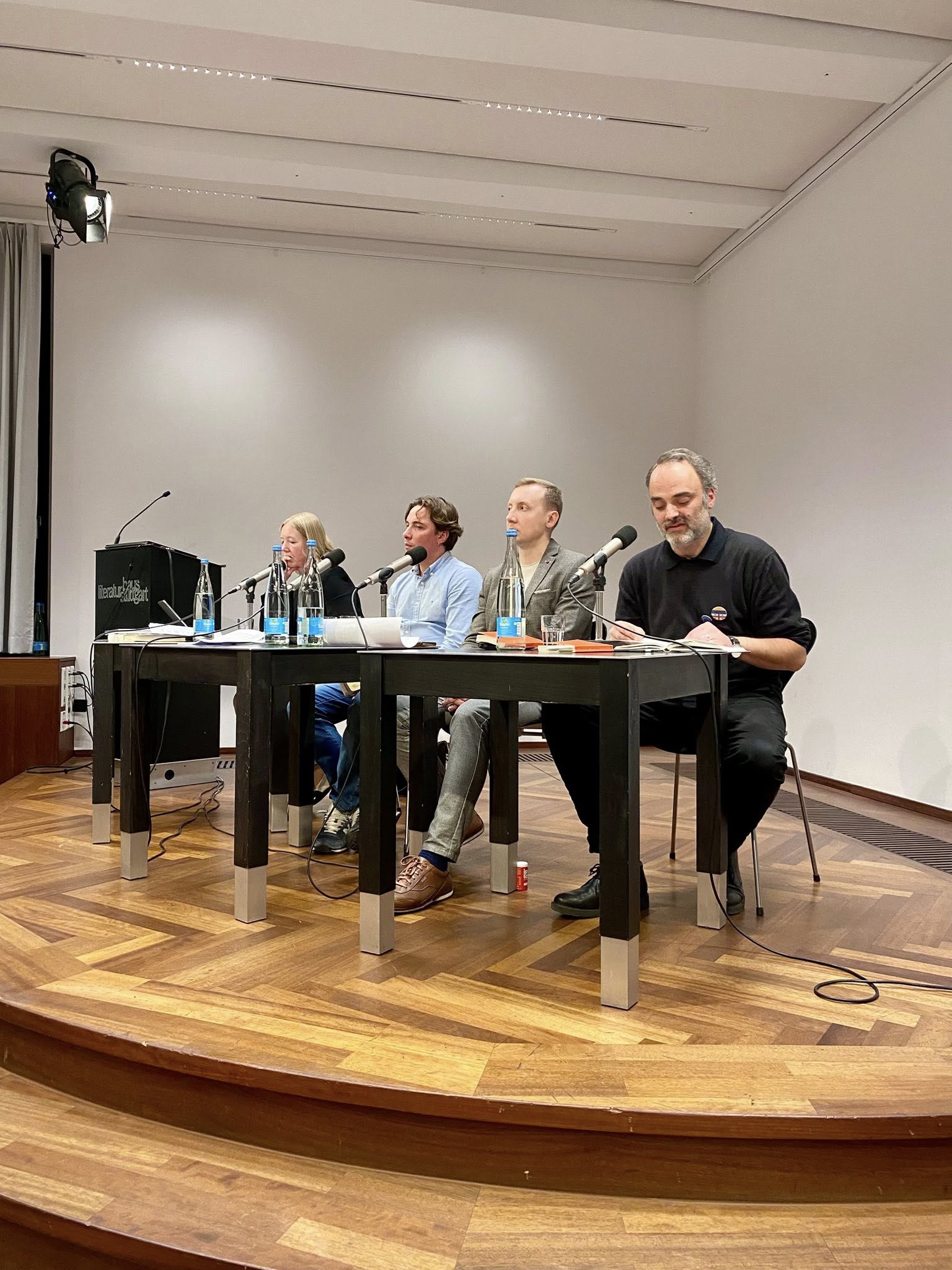
„The pages of war“: literary evening at the Stuttgart Literaturhaus with and in memory of authors from Ukraine
Ukrainian author Andriy Lyubka describes his experiences as a volunteer aid worker in „The Back Side of War“ and paints a vivid picture of everyday life in Ukraine, which is characterised by war. He reports on encounters with soldiers, civilians and helpers whose lives have changed fundamentally (Transit Verlag, published in September 2025).
Stanislav Aseyev describes in „Heller Weg. Donetsk - Report from a Torture Prison“, Stanlav Aseyev describes his several years of imprisonment in the notorious „Isolatsiya“ in Donetsk and documents the violence and repression under Russian occupation (Suhrkamp, 2023).
In honour of the murdered authors Victoria Amelina and Volodymyr Vakulenko, their texts will be presented. Vakulenko's diary from occupied Izjum and Amelina's publications bear witness to the experiences under Russian rule and visualise the human and cultural losses.
Discussion evening | The Russian war of aggression against Ukraine in its second year. How has the debate in Germany changed?
Historical concepts and analyses are playing an increasingly important role in the current debate on support for Ukraine in Germany. However, it is important to remember that this discussion is part of a complex conflict that extends far beyond Germany's borders.
MIT: Klaus Gestwa, Professor of Eastern European History and Director of the Institute for Eastern European History and Regional Studies at the Eberhard Karls University of Tübingen; Anastasia Tikhomirova, journalist for taz, ZEIT ONLINE and Jungle World, among others; Afina Albrecht, who was honoured as Stuttgart Woman of the Year 2022 for her wide-ranging commitment.
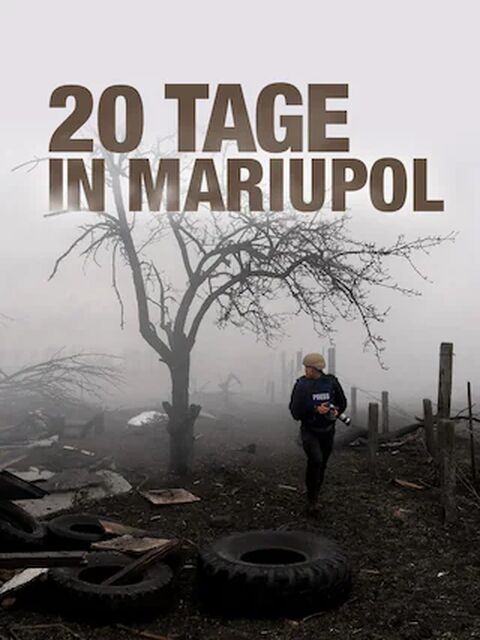
Film screening of ‚20 Days in Mariupol‘ followed by a panel discussion in the Atelier am Bollwerk.
When the siege of Mariupol by the Russian invasion forces begins, most members of the press leave the Ukrainian harbour city. Filmmaker Mstyslav Chernov, photographer Evgeniy Maloletka and producer Vasilisa Stepanenko are the only international reporters on the ground to capture crucial images of the war. The film by Pulitzer Prize winner Mstyslav Chernov is based on his personal reports and vividly shows the heroism of news journalism in conflict zones.
The film was awarded an Oscar for „Best Documentary Film“.
MIT: Klaus Gestwa, Professor of Eastern European History and Director of the Institute for Eastern European History and Regional Studies at the Eberhard Karls University of Tübingen; Kateryna Ilchenko, IT entrepreneur from Mariupol who witnessed the siege; currently a lecturer at Arden University Berlin.